The inflatable décor guide
Constant air or airtight: which system is right for you?
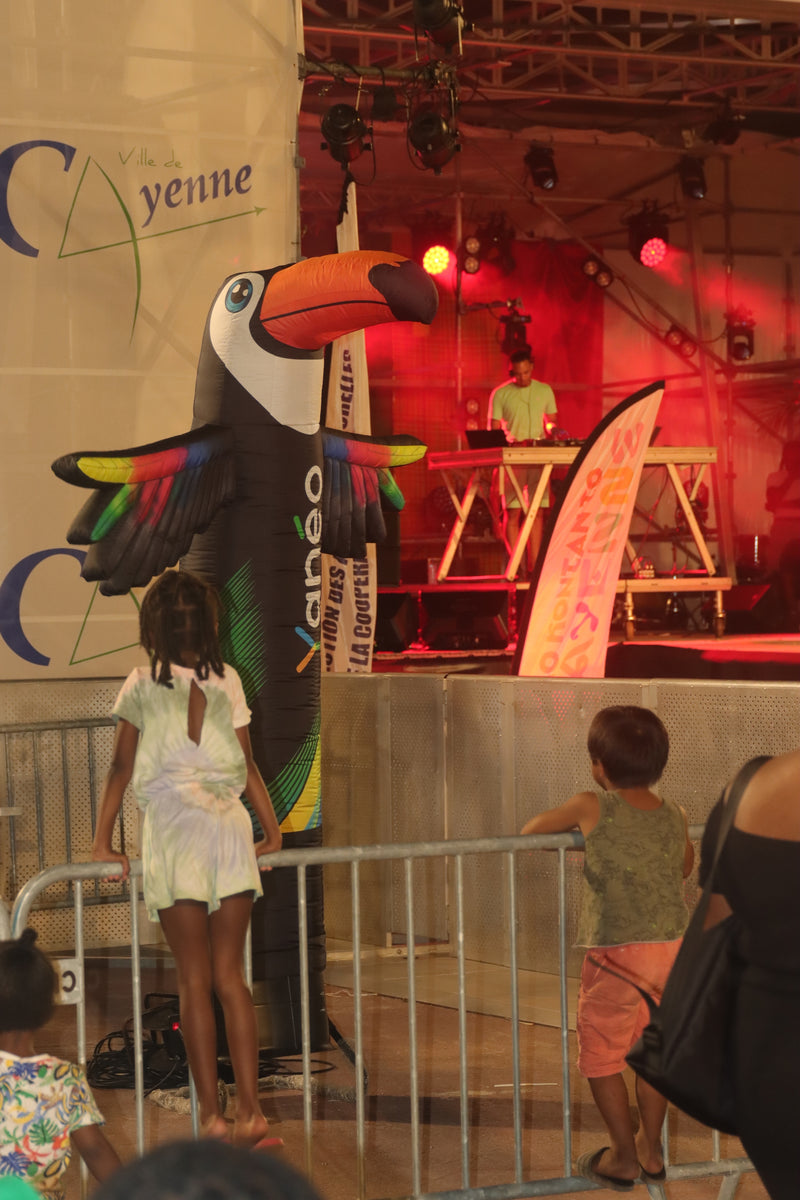
A constant-air inflatable is fed by a blower for as long as it is in use. An airtight (sealed) inflatable holds its air with no blower running, but its pressure needs to be monitored.
Colour key: Constant airAirtightBoth systems
01The basics
Two ways to hold the shape
For an illuminated moon, a decorative sphere or a branded inflatable, the right choice depends on the venue, how long it stays up, how much noise is acceptable and whether someone is available to carry out checks.
Continuous air supply
Constant air
An electric blower runs the whole time and makes up for the air that escapes by design through the seams and fabric.
Pros
- A steady air supply that keeps the shape crisp.
- Fewer manual top-ups while in use.
- Small leaks are compensated for, within the blower’s capacity.
- The most affordable system to buy: typically at least half the price of an airtight model of the same size.
Cons
- Needs a power supply for as long as it is up.
- Blower noise and running electricity costs.
- Can lose its shape if the blower fails or the power cuts out.
- The blower and connections must be set up within their rated operating conditions.
Air sealed inside
Airtight (sealed)
The inflatable is pumped up through a valve, then sealed. The pump is removed once it is inflated.
Pros
- Silent: no blower noise while on display.
- No constant power needed to stay inflated.
- No blower to hide next to the piece.
Cons
- Pressure must be checked as per the manufacturer’s instructions.
- May need topping up when temperatures drop.
- May need adjusting during large temperature swings.
- Any air loss is not made up automatically.
- Higher purchase price: typically at least double that of a constant-air model.
Two set-ups: built-in or external blower
The blower on a constant-air inflatable can be fitted in two ways, decided at the production stage according to the volume of the inflatable, its shape and where it will be installed.
Built-in: the fan is mounted directly in the wall of the inflatable, in a purpose-made ring. It sits flush with the piece, stays out of sight and only a power cable comes out.
External: a standalone blower sits on the ground, next to the piece or further away, and connects to its inflation tube via an extension tube. It can be moved away or hidden, and is easy to swap out.
Volume is often the deciding factor: a small built-in fan is enough for small and medium pieces, while a large inflatable generally needs a more powerful external blower. Blower output and set-up are specified with the manufacturer for each model.
02Compare
The differences at a glance
| Feature | Constant air (blower) | Airtight (sealed) |
|---|---|---|
| Purchase price | The most affordable: typically at least half the price | Typically at least twice the price |
| Inflation | Continuous air supply | Initial inflation plus occasional top-ups |
| Noise | Audible blower; level depends on the model | No constant blower noise |
| Power | Required for the blower at all times | For the pump when inflating or topping up; lighting is separate |
| Temperature | The constant airflow helps it keep its shape | Pressure needs monitoring and may need adjusting |
| Leaks | Offset up to the blower’s capacity; repair still needed | Slow or fast deflation depending on the leak; repair needed |
| Power cut | Risk of deflating | No direct effect on the sealed air |
| Outdoor installation | To be confirmed for the piece, blower and connections | To be confirmed for the envelope, valves, fixings and lighting |
On small screens, scroll the table sideways.
Our speciality: airtight in Oxford + TPU
For airtight inflatables, most European manufacturers only offer PVC. Custom Air Factory also offers an Oxford + TPU construction, which is still very rare in Europe: an outer Oxford fabric envelope that gives the shape and carries the print, with an inner TPU bladder that holds the air.
Easier to carry, ship and set up, especially on large diameters.
Takes up less space in storage, in transit and when shipping.
TPU stays flexible at low temperatures, whereas PVC tends to stiffen: a real advantage for winter installations.
The Oxford fabric takes the abrasion and snags, while the part that holds the air stays shielded inside.
Matte look with sharp printing across the whole piece.
TPU doesn’t need plasticisers to stay flexible, unlike most flexible PVC.
| Feature | PVC | Oxford + TPU |
|---|---|---|
| Construction | Single membrane | Fabric envelope + air bladder |
| Weight | Heavier | Lighter |
| Packed size | Bulkier | More compact |
| In cold weather | Tends to stiffen | Stays flexible |
| Finish | Smooth and glossy, easy to wipe clean | Matte fabric, printed all over |
| Availability in Europe | Widely available | Rare: offered by Custom Air Factory |
PVC still has its strengths: a smooth surface, easy cleaning and a glossy finish. We’ll recommend the best material for your use, the season and the venue.
03Going outdoors
Rain, winter and temperature: what really matters
Neither system is automatically suitable for permanent outdoor installation. How long it can stay out, its weather resistance and its maintenance requirements must be confirmed for the model you order.
When the air heats up or cools down
In an airtight inflatable, warming air can raise the internal pressure. Cooling can slacken the envelope and cause creases. A top-up may then be needed, without exceeding the working pressure.
Even in winter, the sun can warm the piece during the day before temperatures drop at night. Staying outside day and night doesn’t remove these swings.
What the pressure relief valve does
A pressure relief valve opens above a set threshold to let air out. One valve can be enough if its flow rate and setting are right. The manufacturer should confirm this protection for the piece and its intended conditions of use.
The valve doesn’t re-inflate the piece. After cooling, a top-up may still be needed, especially if air was vented earlier. If the manufacturer also requires manual deflation, they should specify when.
Rain, frost and UV
“Airtight” describes how the piece holds air; on its own it doesn’t guarantee resistance to rain, frost or UV. Lighting, cable entries, valves and seams matter too.
The blower and the weather
Temperature swings are less of an issue here: the blower supplies air non-stop, which helps the piece keep its shape.
However, the blower and the electrical set-up must be rated for the conditions they will face. A spare blower lets you swap it out after a failure, but doesn’t protect the set-up from rain.
Wind and fixings
In both cases, ask for the wind limits and the anchoring, ballast or rigging plan. These requirements depend on the piece and the venue.
04Case study Airtight
An airtight moon: 4 m or 5 m?
So the larger one takes almost twice as much air to inflate.
A 4 m diameter is easier to handle and means less air to move when adjusting. At the same pressure, a larger sphere also puts more stress on its envelope.
But a 4 m moon is still affected by temperature. A larger volume does not, by itself, mean the same temperature rise causes a bigger pressure rise. The choice should take into account the construction, the relief valve and the manufacturer’s testing.
05FAQ
Answers before you choose
BothWhat is the difference between a constant-air and an airtight inflatable?
The first runs a blower the whole time it is up. The second keeps its air in a sealed envelope with no blower running, but may need checks and top-ups.
AirtightCan an airtight inflatable stay outdoors over winter?
Yes, if the model is designed and approved for those conditions. Confirm the minimum temperature, wind limits, weather resistance and how often it needs checking. The word “airtight” alone isn’t enough.
BothWhich system is more affordable?
To buy, constant air: a constant-air model is typically at least half the price of an airtight model of the same size, as it is simpler to make. Just allow for the blower’s electricity use while it is running.
AirtightDoes a relief valve mean no more top-ups?
No. It vents excess pressure but never adds air, so cooling or an air leak can still call for a top-up.
AirtightDoes it need air every day?
There is no set frequency. It depends on how well it holds air, the temperature and the pressure needed to keep its shape. Follow the manufacturer’s check schedule rather than guessing.
AirtightCan a 5 m airtight moon be made?
Yes. Being able to make it doesn’t guarantee hands-off outdoor use, though. Ask for the model to be approved for your installation, with written maintenance instructions.
BothIs PVC always better than Oxford with TPU?
No. PVC can be a standalone membrane or a coating on fabric. An Oxford and TPU build can combine a fabric envelope with an air bladder. Durability depends on the exact materials, their thickness, the seams and the overall design. Custom Air Factory offers both constructions for airtight inflatables.
Constant airCan a constant-air blower run in the rain?
Only within the conditions the model and its electrical set-up are rated for. Check the manual and the protection required. A spare blower won’t make unsuitable equipment safe to run in the rain.
BothWhich system suits an illuminated moon?
Airtight can work if silence is the priority and someone can keep an eye on the pressure. Constant air helps the moon keep its shape if power is available and some blower noise is acceptable. In both cases, the lighting needs checking separately.