Technical Expertise
Materials, standards and professional use
For an inflatable intended for professional use, the choice of materials and consideration of safety constraints are essential. The objective is simple: to obtain a reliable, durable structure that can be used in the field, whether for events, public spaces, or industrial applications.
The most common materials
The right material depends on the actual use (installation time, indoor/outdoor, frequency of use, industrial or public environment, weather conditions). Here are the most common materials used in professional inflatables:
| Oxford polyester |
This fabric is widely used in events and communications. It offers a good balance between weight, durability, and visual appeal. It's suitable for numerous custom projects depending on the finishes and reinforcements. |
| PVC (tarpaulin) |
A heavier and very robust material, often chosen for intensive uses, high stresses or structures requiring additional strength. |
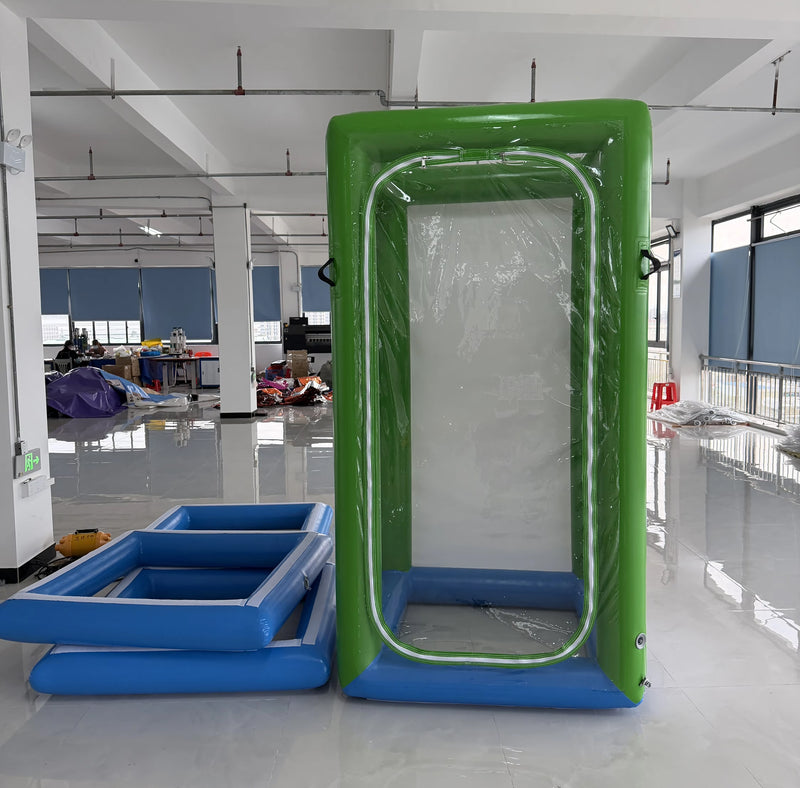
| Transparent PVC films |
Used for windows or transparent areas in certain projects. Choose according to usage constraints and required resistance. |
Important: beyond the material, the finishes (seams, reinforcements, prints, anchors) have a major impact on durability and safety.
What most influences sustainability
Two inflatable "Oxford" inflatables can have very different lifespans. The determining factors are often:
- Quality of stitching and reinforcements in stress areas
- Print quality (durability, resistance to rubbing, finish)
- Anchor points and accessories adapted to the terrain
- Quality of the closures (zippers) and finishes
- Suitable for use: indoors, outdoors, wind exposure, frequency of installation
Standards and constraints: what you need to understand
Standard requirements vary depending on the context: public space, event, industrial site, presence of the public, client or venue constraints. It is therefore essential to clarify these points from the initial briefing.
Depending on the circumstances, you may be asked for information related to safety, fire resistance, or technical documents. The important thing is to define the intended use and the expected level of performance before manufacturing.
-
Public venue / event : requirements may vary depending on the organizer or the site.
-
Local authorities : frequent requests for documents and guarantees of use.
-
Industry : field constraints and operational safety (signage, zones, traffic).
Tip: If your event or venue requires specifications, send them out from the start to avoid any unpleasant surprises.
Professional use: indoor, outdoor, industrial
For professional use, the question isn't just "which fabric," but also "under what conditions." To ensure you make the right choice, here's the key information to consider:
- Place of use (indoor / outdoor / industrial environment)
- Duration and frequency of use (one-off, repetitive, intensive)
- Weather constraints (wind, rain, sun) if used outdoors
- Soil type and anchoring constraints
- Objective: visibility, signage, decor, brand activation
Do you have a specification or a standard constraint?
Send us your requirements (use, location, dimensions, deadline) and, if you have them, the specifications for the site or event. We will guide you towards a suitable solution in terms of materials, finishes, and usage constraints.